


Introduction
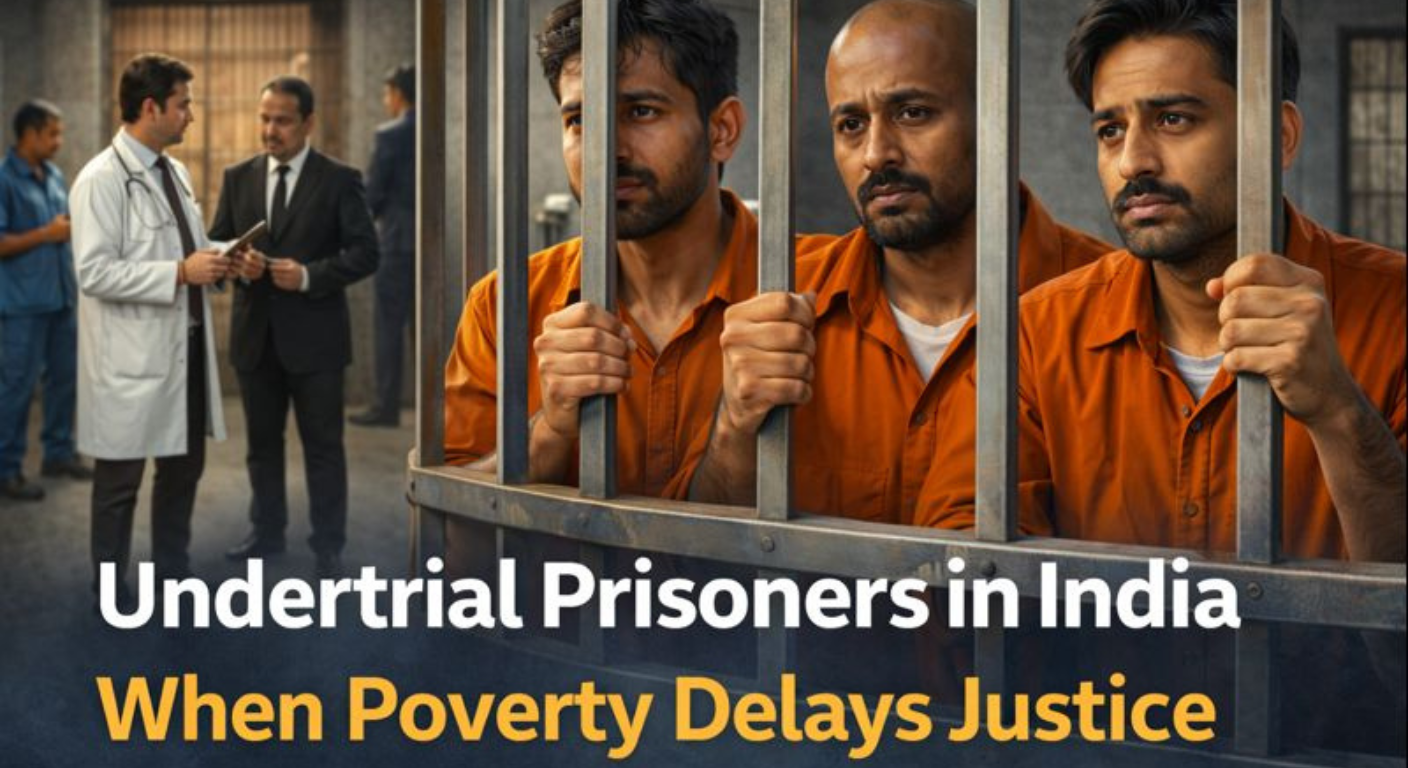
India’s criminal justice system is founded on the principle that every person is presumed innocent until proven guilty. Yet, across the country, undertrial prisoners—individuals who have not been convicted of any crime—continue to remain incarcerated for months and even years. For many, the reason is not guilt, but poverty, lack of legal representation, and systemic delay.
This silent injustice affects not just prisoners, but their families, livelihoods, and futures. At Muktidharma Foundation, we work to address this gap by ensuring access to legal aid, humanitarian support, and dignity for undertrial prisoners across India.
Who Are Undertrial Prisoners?
Undertrial prisoners are individuals who are awaiting trial or the conclusion of legal proceedings. According to official data, undertrials constitute a significant majority of India’s prison population. Many are first-time offenders, accused of minor or bailable offences, yet they remain imprisoned because they cannot afford bail or legal assistance.
Common challenges faced by undertrial prisoners:
-
Inability to afford private lawyers
-
Lack of awareness about legal rights
-
Delays in court proceedings
-
Financial hardship affecting bail and documentation
-
Poor access to medical care and basic necessities
Poverty as a Barrier to Justice
For an undertrial prisoner, poverty becomes an invisible sentence. Bail amounts, legal paperwork, and travel for court hearings impose financial burdens that many families simply cannot meet. As a result, individuals remain incarcerated even when the law permits release.
This reality contradicts Article 21 of the Constitution of India, which guarantees the right to life and personal liberty, and Article 39A, which mandates free legal aid. Justice delayed due to poverty is justice denied.
The Role of Legal Aid
Access to free and timely legal aid can dramatically change outcomes for undertrial prisoners. Proper legal representation helps:
-
File bail applications efficiently
-
Challenge unlawful detention
-
Ensure procedural safeguards are followed
-
Reduce prolonged incarceration
However, legal aid systems remain overburdened, and many prisoners fall through the cracks. This is where civil society organisations play a critical role.
How Muktidharma Foundation Makes a Difference
Muktidharma Foundation works at the intersection of law, dignity, and compassion. Our mission is not limited to legal representation alone. We adopt a holistic approach to justice.
Our interventions include:
-
Facilitating access to free legal aid and legal counselling
-
Supporting bail and procedural assistance
-
Providing clothing, hygiene kits, and daily essentials
-
Offering emergency financial and medical assistance
-
Promoting legal awareness among prisoners and families
Each intervention aims to restore dignity and ensure that poverty does not dictate freedom.
Why This Work Matters
When undertrial prisoners remain incarcerated unnecessarily:
-
Families lose their primary earners
-
Children drop out of school
-
Mental and physical health deteriorates
-
The justice system becomes overcrowded and inefficient
Ensuring justice for undertrial prisoners is not just a humanitarian issue—it is a constitutional and societal responsibility.
Conclusion
Justice must be equal, accessible, and humane. At Muktidharma Foundation, we believe that no one should remain behind bars simply because they are poor. Through legal aid, humanitarian support, and systemic advocacy, we strive to uphold the true spirit of justice.
When you support this cause, you help transform lives, reunite families, and bring the Constitution’s promise closer to reality.