


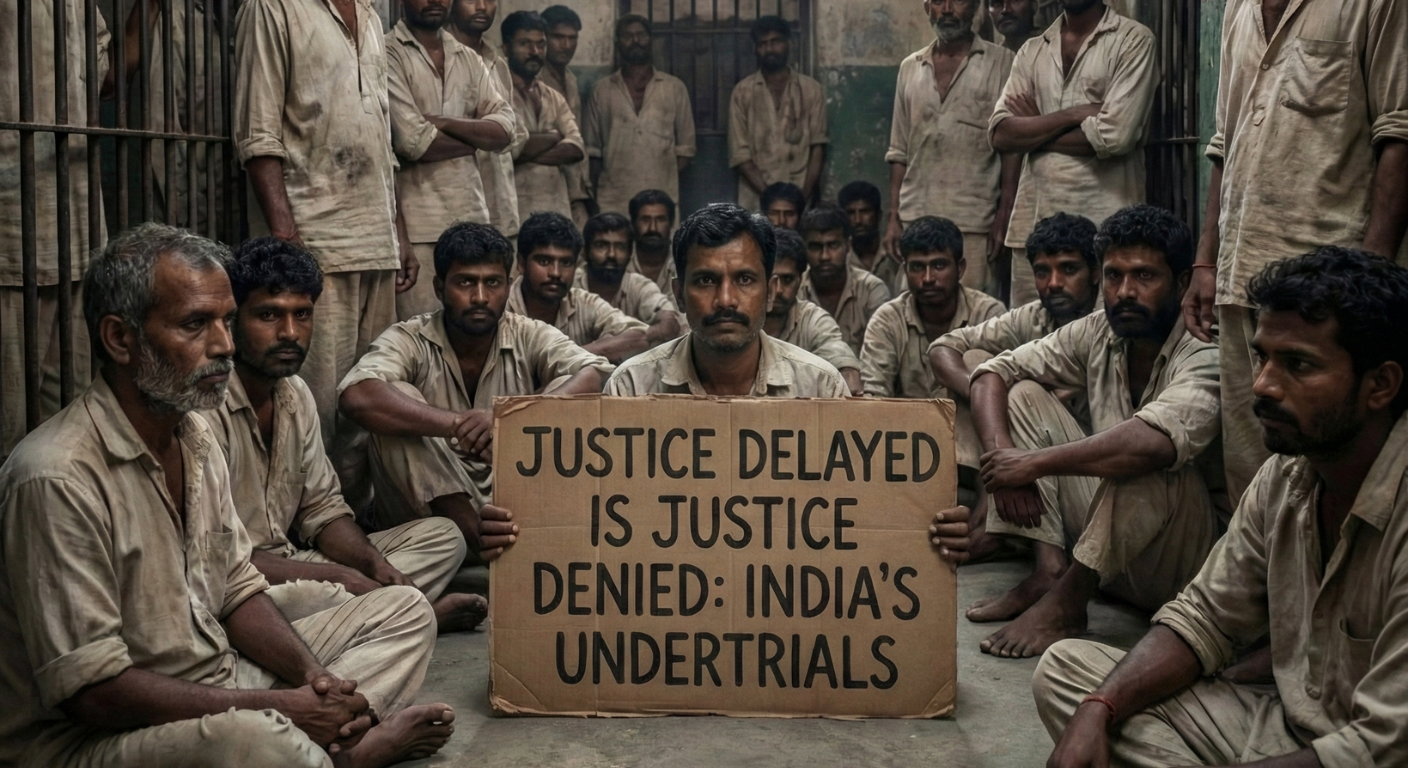
Access to justice is the foundation of a democratic and constitutional society. In India, justice is not meant to be reserved for the powerful, the wealthy, or the well-informed—it is a constitutional right guaranteed to every individual. Yet, for millions of people, particularly those from marginalised and economically disadvantaged backgrounds, access to justice remains distant and uncertain.
The gap between constitutional promise and lived reality raises a critical question: if justice is guaranteed by law, why is it still inaccessible to so many?
Constitutional Basis of Access to Justice in India
The Constitution of India places access to justice at the heart of its legal framework.
-
Article 14 guarantees equality before the law and equal protection of laws.
-
Article 21 protects the right to life and personal liberty, which the Supreme Court has consistently interpreted to include the right to fair procedure and speedy trial.
-
Article 39A mandates the State to ensure free legal aid so that opportunities for securing justice are not denied due to economic or other disabilities.
Together, these provisions establish that justice is not a privilege—it is a fundamental right that the State is obligated to protect and promote.
The Reality: Barriers to Justice
Despite strong constitutional safeguards, access to justice in India remains uneven. Several systemic barriers prevent individuals from exercising their legal rights effectively.
1. Economic Constraints
Legal proceedings can be expensive and complex. Court fees, legal representation, documentation, and travel costs make justice unaffordable for many. For individuals living in poverty, choosing between daily survival and legal action is often unavoidable.
2. Lack of Legal Awareness
A significant portion of the population is unaware of their rights, remedies, or available legal aid services. This lack of legal awareness results in delayed action, procedural errors, and in some cases, complete denial of justice.
3. Inadequate Legal Aid
Although free legal aid in India is recognised by law, its implementation often falls short. Under-resourced legal aid systems, high caseloads, and limited outreach leave many vulnerable individuals without effective representation.
4. Procedural Delays
Judicial backlog and procedural delays further restrict access to justice. Prolonged trials and delayed hearings disproportionately affect those who cannot afford prolonged litigation, particularly undertrial prisoners and accused persons.
Impact on Vulnerable Communities
The consequences of denied access to justice are severe. Marginalised communities, migrant workers, women, and undertrial prisoners are often the most affected. Many remain trapped in legal processes without guidance, leading to prolonged detention, loss of livelihood, and social stigma.
For undertrial prisoners, lack of timely legal assistance means continued incarceration despite the presumption of innocence. This undermines not only individual liberty but also public confidence in the justice delivery system.
Role of Civil Society and Legal Aid Organisations
Civil society organisations play a vital role in bridging the gap between law and justice. By providing legal aid, counselling, and awareness, such organisations ensure that constitutional rights are not merely theoretical.
Muktidharma Foundation is committed to promoting free, fair, and timely access to justice. Guided by constitutional values, the Foundation works to support undertrial prisoners and accused individuals who are unable to navigate the legal system due to poverty or lack of awareness. Through legal assistance, research, and advocacy, the Foundation contributes to strengthening the criminal justice system and protecting human rights.
Why Access to Justice Strengthens Democracy
A justice system that is accessible to all strengthens democracy and the rule of law. When people trust that their rights will be protected regardless of their social or economic status, faith in institutions grows. Conversely, denial of justice breeds inequality, resentment, and systemic injustice.
Ensuring access to justice also improves governance, reduces unlawful detention, and promotes accountability within the justice system.
The Way Forward
To make access to justice a lived reality, the following measures are essential:
-
Strengthening legal aid infrastructure
-
Expanding legal awareness programs
-
Ensuring timely bail and speedy trials
-
Supporting judicial reforms to reduce backlog
-
Encouraging community-based legal support initiatives
Justice must reach those who need it most, not just those who can afford it.
Conclusion
Access to justice is not an act of charity—it is a constitutional obligation. When justice becomes inaccessible, constitutional rights lose their meaning. By strengthening legal aid systems and supporting vulnerable individuals, India can move closer to a justice system that is fair, inclusive, and humane.
A society that upholds access to justice for all truly honours the spirit of its Constitution.