


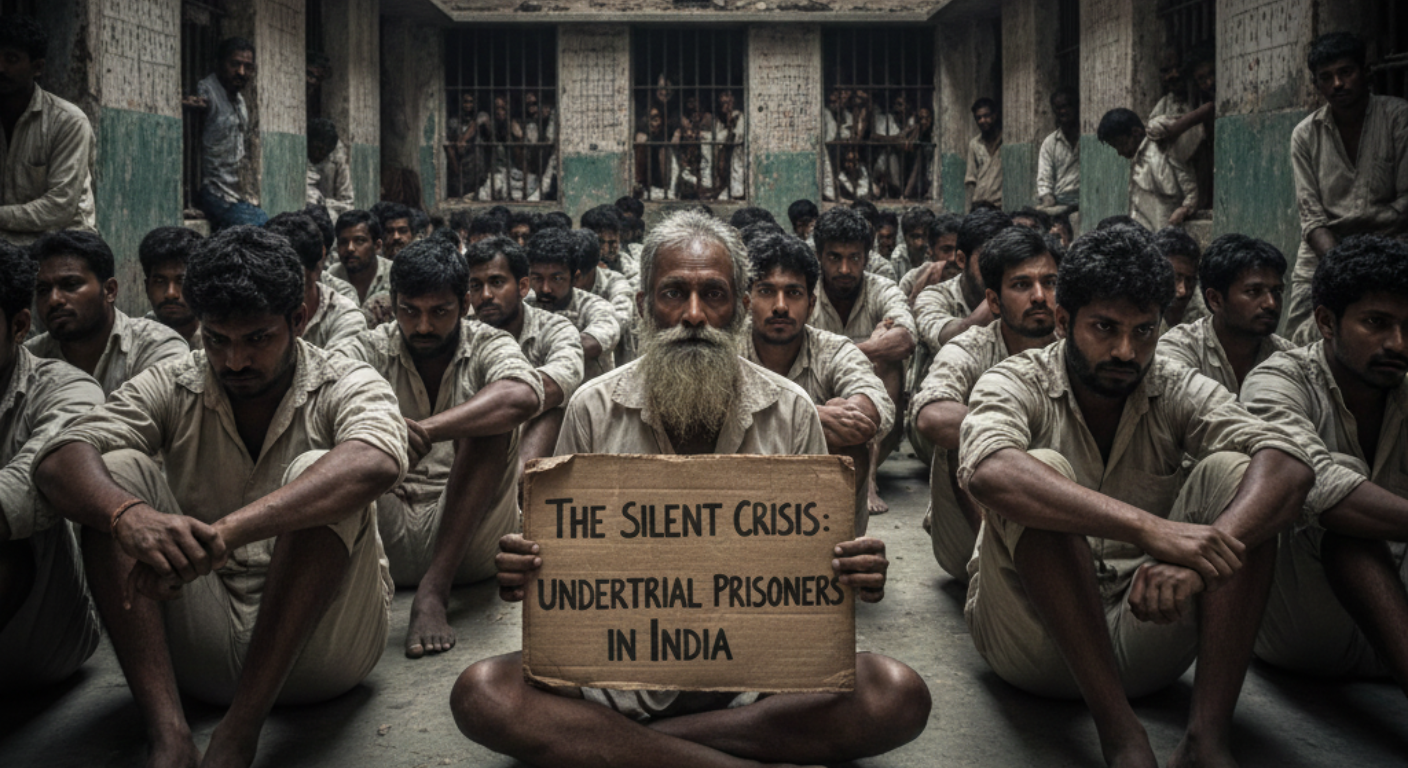
India’s criminal justice system is facing a silent but deeply troubling crisis—the prolonged incarceration of undertrial prisoners. Undertrial prisoners are individuals who have been accused of an offence but have not yet been convicted by a court of law. Despite the constitutional principle of “innocent until proven guilty,” undertrials form the majority of India’s prison population, highlighting serious gaps in access to justice, legal aid, and procedural efficiency.
This crisis is not merely about overcrowded prisons; it is about lost liberty, dignity, and human rights.
Who Are Undertrial Prisoners?
Undertrial prisoners include people arrested for alleged offences whose trials are pending before courts. Many remain behind bars for months or even years without their cases being concluded. In several instances, the period of detention exceeds the maximum punishment prescribed for the offence itself.
The reasons for prolonged incarceration are systemic—lack of effective legal representation, procedural delays, poverty, illiteracy, and marginalisation. For those who cannot afford private lawyers or navigate complex legal procedures, justice becomes inaccessible.
Constitutional Guarantees vs Ground Reality
The Constitution of India provides strong safeguards to protect individual liberty.
-
Article 21 guarantees the right to life and personal liberty.
-
Article 14 ensures equality before the law.
-
Article 39A directs the State to provide free legal aid to ensure access to justice.
Despite these guarantees, thousands of undertrial prisoners remain incarcerated due to the failure of legal aid mechanisms and delays in the justice delivery system. The gap between constitutional ideals and ground realities exposes the vulnerability of economically and socially disadvantaged individuals.
Key Causes of the Undertrial Crisis in India
1. Lack of Legal Aid and Representation
Many undertrial prisoners are unrepresented or inadequately represented. Legal aid services, though available in law, often fail to reach those who need them most. Without timely legal assistance, bail applications remain pending and cases stagnate.
2. Poverty and Social Marginalisation
For individuals living below the poverty line, arranging bail amounts, sureties, or legal fees is often impossible. Marginalised communities, migrants, and daily wage workers are disproportionately affected, making the crisis a social justice issue.
3. Procedural Delays and Judicial Backlog
India’s courts are overburdened with pending cases. Delayed investigations, frequent adjournments, and slow trials result in prolonged pre-trial detention, turning prisons into holding centres for the unconvicted.
4. Lack of Legal Awareness
Many undertrial prisoners are unaware of their legal rights, including the right to bail, legal aid, or speedy trial. This lack of awareness leaves them dependent on an already strained system.
Human and Social Impact
The prolonged detention of undertrial prisoners has devastating consequences. Families lose breadwinners, children drop out of school, and individuals suffer psychological trauma. Social stigma often persists even after release, making rehabilitation difficult.
Overcrowded prisons also strain public resources and undermine the efficiency of the criminal justice system. When undertrials occupy prison spaces unnecessarily, it affects overall prison administration and public safety.
The Role of Legal Aid Organisations
Civil society organisations play a crucial role in addressing this crisis. By identifying undertrial prisoners in need of assistance, facilitating access to competent legal counsel, and supporting bail and appeal processes, legal aid organisations help restore constitutional balance.
Muktidharma Foundation works towards ensuring free, fair, and timely access to justice for undertrial prisoners and accused individuals. Rooted in constitutional values, the Foundation intervenes at critical stages of the legal process to prevent unjust and prolonged incarceration.
The Way Forward
Addressing the undertrial crisis requires a multi-pronged approach:
-
Strengthening legal aid mechanisms
-
Ensuring timely bail hearings
-
Promoting legal awareness
-
Encouraging judicial reforms for speedy trials
-
Supporting rehabilitation and reintegration
Justice must not depend on wealth, influence, or awareness. A humane and constitutional criminal justice system must protect liberty and dignity at every stage.
Conclusion
The crisis of undertrial prisoners in India is a reminder that justice delayed is justice denied. Ensuring access to legal aid and timely judicial intervention is not charity—it is a constitutional obligation. By addressing systemic failures and supporting vulnerable individuals, we move closer to a justice system that is fair, inclusive, and humane.